CA24: Auditing and Assurance

- 18 Sections
- 65 Lessons
Join Live Zoom Class
8 Lessons
- Live Interactive Zoom Session
- AUDIT AND ASSURANCE -COURSE OUTLINE-MR THUKU
- CHAPTER 1 -INTRODUCTION TO AUDIT AND ASSURANCE
- CHAPTER 2 NOTES- ASSURANCE AND ENGAGEMENT
- CHAPTER 3 NOTES-LEGAL AND PROFESSIONAL FRAMEWORK OF AUDITING
- CHAPTER 4 NOTES-AUDIT PLANNING AND ASSESSMENT
- CHAPTER 5 NOTES-INTERNAL CONTROL SYSTEMS
- CHAPTER 6 NOTES- AUDIT EVIDENCE -MR THUKU
Topic 1
4 Lessons
Topic 2
5 Lessons
Topic 3
36 Lessons
- 22ND SEP TUE (EARLY MORNING) BY MR. THUKU - TOPIC: LEGAL AND PROFESSIONAL FRAMEWORK OF AUDITING
- 22ND SEP TUE( DAY CLASS) BY MR. THUKU - SUBTOPIC: AUDITORS LEGAL LIABILITY
- 22ND SEP TUE (EVENING CLASS) BY MR. THUKU - SUBTOPIC: OTHER ETHICAL ISSUES
- 24TH SEP THUR(EARLY MORNING CLASS) BY MR. THUKU - SUBTOPIC: AUDITORS' LEGAL LIABILITY
- 24TH SEP THUR(DAY CLASS) BY MR. THUKU - TOPIC: CLIENT ACCEPTANCE PROCEDURES AND AUDIT PLANNING
- LEGAL AND PROFESSIONAL FRAMEWORK OF AUDITING -NOTES-MR THUKU
- 25TH SEP FRI (DAY CLASS) BY MR. THUKU - SUBTOPIC: RISK ASSESSMENT
- 26TH SEP SAT(DAY CLASS) BY MR. THUKU - TOPIC: AUDIT PLANNING AND RISK ASSESSMENT
- 29TH SEP TUE(EARLY MORNING CLASS) BY MR. THUKU - TOPIC: AUDIT PLANNING AND RISK ASSESSMENT
- 29TH SEP TUE(DAY CLASS) BY MR. THUKU - SUBTOPIC: RISK BASED APPROACH MATERIALITY CONCEPT
- 29TH SEP TUE(EVENING CLASS) BY MR. THUKU - SUBTOPIC: RISK ASSESSMENT
- 1ST OCT THUR(EARLY MORNING CLASS) BY MR. THUKU - TOPIC: AUDIT PLANNING AND RISK ASSESSMENT (RISK ASSESSMENT)
- 1ST OCT THUR(DAY CLASS) BY MR. THUKU - SUBTOPIC: AUDIT PROGRAMS
- 2ND OCT FRI(DAY CLASS) BY MR. THUKU - TOPIC: INTERNAL CONTROL SYSTEM
- 6TH OCT TUE(EARLY MORNING CLASS) BY MR. THUKU - SUBTOPIC: SETTING MATERIALITY LEVELS
- 6TH OCT TUE(DAY CLASS) BY MR. THUKU - TOPIC:TYPES OF CONTROL PROCEDURES AND MANAGEMENT LETTER
- 6TH OCT TUE(EVENING CLASS) BY MR. THUKU - TOPIC: INTERNAL CONTROL SYSTEM
- 3RD OCT SAT(EVENING CLASS) BY MR. THUKU - SUBTOPIC: SETTING MATERIALITY LEVELS AND AUDIT PROGRAMS
- 8TH OCT THUR(EARLY MORNING CLASS) BY MR. THUKU - TOPIC: INTERNAL CONTROL SYSTEM(OBJECTIVES OF ICS)
- 8TH OCT THUR(DAY CLASS) BY MR. THUKU - SUBTOPIC: ICS IN PRACTICE
- 9TH OCT FRI(DAY CLASS) BY MR. THUKU - SUBTOPIC: ICS IN PRACTICE(CONTINUATION)
- 10TH OCT SAT(EVENING CLASS) BY MR. THUKU - SUBTOPIC: ICS IN PRACTICE/ EVALUATION OF ICS
- INTERNAL CONTROL SYSTEM-MR THUKU -NOTES
- 13TH OCT TUE(EARLY MORNING CLASS) BY MR. THUKU - TOPIC: AUDIT EVIDENCE (MANAGEMENT ASSETIONS EXPERT EVIDENCE)
- 13TH OCT TUE(DAY CLASS) BY MR. THUKU - TOPIC:AUDIT EVIDENCE
- 13TH OCT TUE(EVENING CLASS) BY MR. THUKU - TOPIC:AUDIT EVIDENCE
- 15TH OCT THUR(EARLY MORNING CLASS) BY MR. THUKU - SUBTOPIC: AUDIT DOCUMENTATION PRT 1
- 15TH OCT THUR(EARLY MORNING CLASS) BY MR. THUKU - SUBTOPIC: AUDIT DOCUMENTATION PRT 2
- 15TH OCT THUR(DAY CLASS) BY MR. THUKU - SUBTOPIC: EXPERT EVIDENCE AND DEBTORS CIRCULARISATION
- 16TH OCT FRI(DAY CLASS) BY MR. THUKU - SUBTOPIC:AUDIT DOCUMENTATION
- 17TH OCT SAT(EVENING CLASS) BY MR. THUKU - SUBTOPIC: AUDIT DOCUMENTATION
- 22ND OCT THUR(EARLY MORNING CLASS) BY MR. THUKU - TOPIC: ERRORS AND FRAUDS
- 22ND OCT THUR(DAY CLASS) BY MR. THUKU - TOPIC: ERRORS AND FRAUDS
- 23RD OCT FRI(DAY CLASS) BY MR. THUKU - TOPIC: FORENSIC AUDIT
- 24TH OCT SAT(EVENING CLASS) BY MR. THUKU - TOPIC: ERRORS AND FRAUDS
- 27TH OCT TUE(DAY CLASS) BY MR. THUKU - TOPIC: INTERNAL AUDIT
Topic 4
1 Lesson
Topic 5
1 Lesson
Topic 6
1 Lesson
Topic 7
1 Lesson
Topic 8
1 Lesson
Topic 9
1 Lesson
Topic 10
1 Lesson
Topic 11
1 Lesson
Topic 12
1 Lesson
Topic 13
1 Lesson
Topic 14
1 Lesson
Topic 15
1 Lesson
my summit test
New section
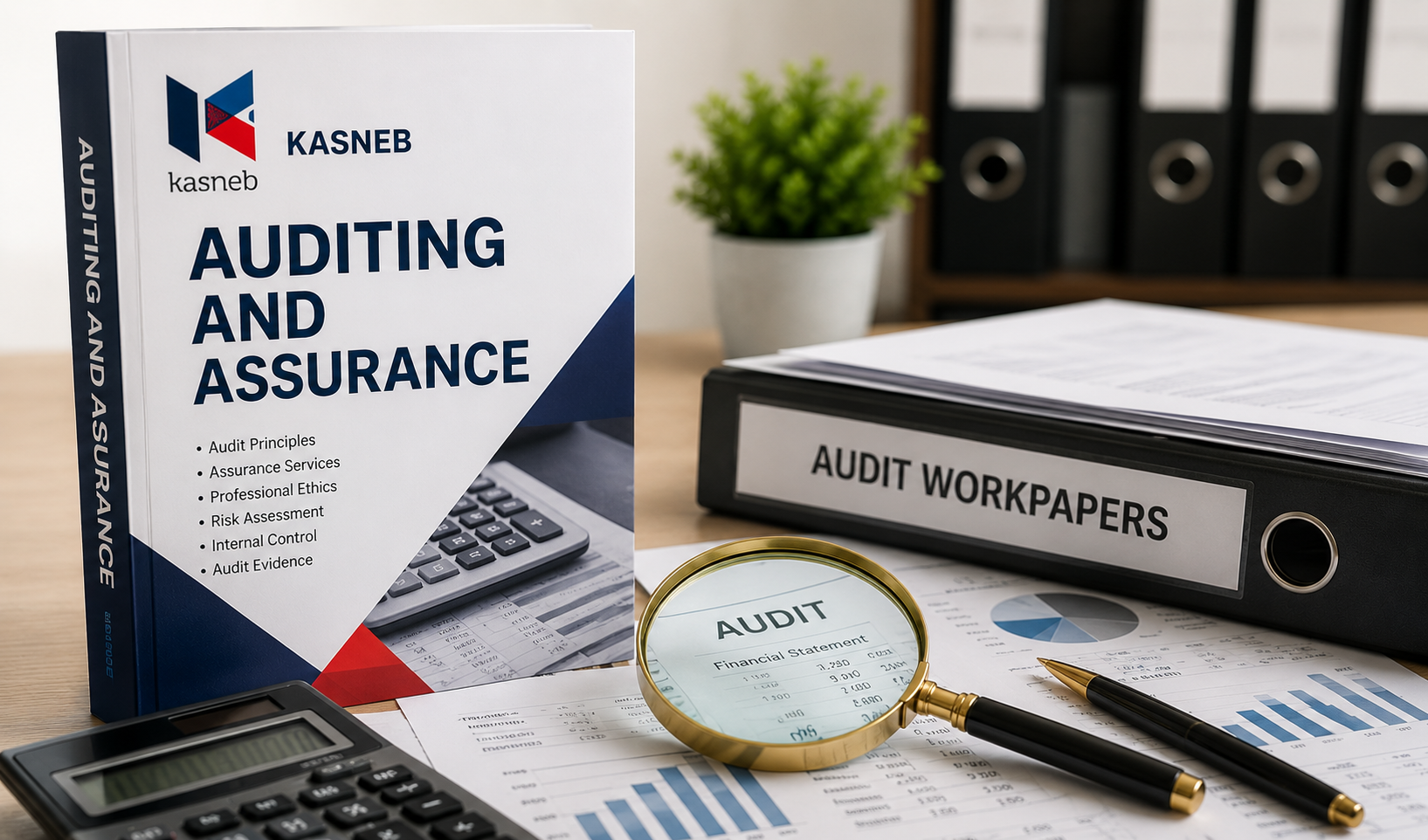
This course equips learners with the knowledge and practical skills required to understand the principles, processes, and standards of auditing and assurance engagements. It introduces learners to audit planning, risk assessment, internal controls, audit evidence, audit reporting, and professional ethics. The course prepares learners to conduct audit assignments in accordance with auditing standards while promoting accountability, transparency, and good corporate governance.
Key Topics Covered
- Nature and purpose of an audit
- Nature and objectives of an audit
- Development of audit (early audit and modern audit)
- Users of audited financial statements
- Features of audits
- Distinction between auditing and accounting
- Types and classification of audits
- Situations when different audits are performed (interim, continuous, final, operational)
- Advantages and disadvantages of various types of audits
- Nature of work done for different audits
- Inherent limitations of an audit
- Assurance and non- assurance engagements
- Definition and objectives of assurance engagements
- Audit as an assurance engagement
- Elements of an assurance engagement
- Types of assurance engagements (Audit, Review assignments)
- Differences between audit and review engagements
- International Standard on Assurance Engagement-ISAE 3000
- Accepting appointment to perform assurance engagement
- Review of interim financial information - ISRE 2410
- Levels of assurance and reports issued on assurance engagements
- Non-assurance engagements (Agreed upon procedures engagement -ISRS 4400 and compilation assignments-ISRS 4410
- Attestation and direct reporting engagements
- Legal and professional framework
- Regulatory framework for external audits
- Appointment of the auditors
- Qualifications and disqualifications of auditors
- Removal and resignation of auditors
- Remuneration of the auditors
- Rights and duties of auditors
- Mechanisms of regulations of auditors-role of professional bodies, Audit committee, rotation of audit firms
- Professional ethics/code of ethics for professional accountants
- Importance of the professional ethics
- Basic/fundamental principles for Code of Ethics for accountants
- Other professional guidelines on audit fees, conflict of interest, advertising and publicity and opinion shopping by clients
- Auditors independence /objectivity and its importance
- Threats to independence and safeguards.
- Threats on adherence to other fundamental principles and safeguards to the threats
- Development and status of ISAs in execution of audits
- Relationship between International Standards of Auditing and National Auditing Standards
- Purposes/importance of adoption of ISA in the audit.
- Planning and Risk Assessment
- Obtaining, accepting and retention of an audit engagement
- Matters to consider before and after acceptance of nomination
- Pre-conditions of an audit
- Engagement letter, procedure of sending letter, purposes and contents of the letter-ISA 210
- Circumstances for revision of engagement terms
- Understanding the entity and its environment
- Background information about the entity or client.
- Ways of gathering knowledge about the business
- Reasons/importance of information gathered about the client
- Reasons of review of previous audit files and communication with previous auditors
- Overview of audit process
- Audit risk assessment
- Components of audit risk (Inherent, Control and Inherent risks)
- Assessment of different types of audit risks
- Factors leading to increase or decrease of inherent, control and detection Risks
- Adoption of risk based audit, reasons and procedure
- Advantages and Disadvantages of the approach
- Evaluating and prioritising risk and control factors
- Mechanisms to minimise the risks associated with client audits.
- Audit planning
- Purpose and challenges in audit planning
- Planning for new and existing clients
- Development of the overall audit strategy
- Contents of audit planning memorandum/ overall plan
- Relationship between audit strategy and audit plan
- Design of audit programs, importance and problems of the programs
- Impact of material misstatements on audit strategy and degree of work done
- Influence of interim audit work on the year end/final audit.
- Audit documentation
- Reasons and importance of audit documentation
- Sources, features and purposes of working papers
- Storage of working papers-permanent audit file and current audit file, auditors note book or diary
- Lien or custody on working papers
- Standardisation of working papers - advantages and disadvantages
- Safe custody and retention of working papers
- Form and content of working papers
- Automated working papers
- Quality control policies and procedures implemented by audit firm
- Objectives of quality controls to the audit firm/ auditors
- Peer review and its objectives
- Internal control systems and Internal Audit Function
- Internal control systems (ICS)
- Objectives of internal control system
- Component of internal control system
- Features of Internal control system
- Designing of internal control system.
- Auditors and management responsibility over ICS
- Advantages and disadvantages /inherent limitations of ICS
- Indicators of weaknesses in ICS and actions taken by management
- The evaluation of internal control systems by auditors using Internal Control Questionnaire, Flow charts and narrative notes
- Tests of controls on specific control environments
- Internal controls theory and practice-sales and debtors, purchases and creditors, inventories and work in progress, fixed assets, salaries and wages
- Communication of improvements on ICS weaknesses/ risks associated
- Management letter.
- Internal Audit Function
- Scope and objectives of internal audit
- Criteria of using internal audit work
- Areas of support on external auditors’ work
- Internal audit review reports and actions by management and those charged with governance
- Design of risk based internal audit plan
- Internal audit key performance indicators
- Managing and monitoring follow up of audit recommendations made to board/ management.
- Outsourcing internal audit function-advantages and disadvantages.
- Audit committee-functions, merits and demerits.
- Internal check systems-scope, features, advantages and disadvantages
- Information technology threats and control
- Auditors duty on compliance with laws and regulations.
- Overview of Forensic Accounting, Errors, Frauds and Irregularities
- Overview of forensic accounting
- Nature, purpose and scope of forensic accounting
- Types of forensic investigations: corruption, asset misappropriation, financial statement fraud, others
- Asset Recovery process and legal framework
- Errors, Frauds and Irregularities
- Differences between error and frauds
- Types of errors-omission, commission, principle, reversal of entries
- Types of Frauds-Teeming and lading, ghost employees, window dressing, misappropriation of goods and fraudulent financial reporting
- Causes of frauds and fraud triangle
- Indicators of errors and frauds
- Detection and prevention of errors and frauds and deterrence-role of internal audit
- Materiality and Implications of errors and frauds in the financial statements
- Impact of errors and frauds on the audit plan
- Reporting on error and frauds
- External auditors and Management responsibility on error and frauds
- Auditors professional skepticism.
- Audit evidence
- Financial statement assertions and audit evidence
- Types and features of audit evidence (sufficiency, reliability and relevance)
- Audit evidence gathering procedures/ techniques
- Materiality and limitations of audit evidence
- Financial statement assertions and audit evidence
- Audit sampling techniques - statistical and non-statistical
- Analytical reviews procedures- nature, objectives, timing and extent of support evidence
- Types of analytical Procedures-Variance analysis, reasonableness tests, trend analysis
- Using the work of experts- areas of support and considerations
- Using management representations (importance, procedures adopted and matters covered).
- Auditing in the public sector
- Introduction to auditing in the public sector and regulatory provisions
- Objective and scope of public sector audit (compliance, performance, financial, value for money)
- Establishment, mandate and functions of public sector auditors
- The parties to audit in public sector-auditor, responsible party and intended users
- Role of internal audit function in public entities
- Relationship between external and internal auditors in the public sector
- Audit reports by office of Auditor General.
- Functions of audit advisory board and executive committee in Auditor General office.
- Auditors Reports
- Purposes of auditors’ report and concept of true and fair view
- Legal /Statutory provisions on audit reports
- Basic elements contents of audit reports
- Emphasis of the matter paragraph and key audit matters
- Types and Consequences of different types of audit reports issued.
- Features of unqualified and qualified audit reports
- Reasons for qualifications of audit reports (Limitation of scope, inherent uncertainties, disagreements)
- Types of qualifications-disclaimer, except for and adverse opinions.
- Overall audit review and finalisation
- Subsequent events/Post balance sheet events review (adjusting and non -
- adjusting events, auditor’s responsibility and audit procedures)
- Going concern review (Auditors and management responsibility, indicators of going concern difficulties, audit procedures, mitigation plans and reporting)
- Management representations on contentious matters affecting financial statements like guarantees made, capital commitments, borrowings, unusual accounting adjustments.
- Review of compliance with accounting policies, opening balances, prior period audits by other auditors
- Format for presentation of independent auditor’s report.
- Auditing in a computerised system
- Audit objectives in computerised systems
- Differences between computerised and manual systems
- Benefits and drawbacks of computerised accounting systems
- Types of controls in computerised systems (Administrative, system development, processing controls, application controls, master files and standing data
- Auditors use of computers in the course of audit
- Planning the audit in computerised systems
- Audit approaches - audit around, with and through the computer and circumstances when each is applied
- Loss of audit trail, causes and measures to mitigate the loss of audit trail
- Computer Assisted Audit Techniques (CAATS) - Audit software and test data
- Types of audit software and functions and types of test data
- Factors considered before using CAATS and steps in CAATS application
- Advantages and disadvantages of CAATS
- Use of embedded audit modules and integrated test facilities
- Information security controls (Encryption, Firewalls, Passwords, Antivirus)
- Contemporary and emerging issues in audit
- E- commerce auditing
- Cloud documentation
- Use of data analytics tools in audit (Anomaly detection, diagnostic analysis, predictive analysis.
- Sample Reading and Reference Material
- Kumar, R (2017). Fundamentals of Practical Auditing. Kushwah.
- Millichamp, A. Auditing. 10th edition. Amazon.
- Rittenberg, G. Auditing. 3rd Edition. Amazon.
- Kasneb e-learning resources (link on kasneb website)
- Kasneb approved study packs
Want to submit a review? Login